Embroidery Style Wall Art: What It Is and Why It Feels So Different
- Azalia

- Apr 27
- 5 min read
Walk into a room where the art on the wall doesn't quite look like a painting, doesn't quite look like a photograph, and yet feels unmistakably handcrafted — and you've likely encountered embroidery-style wall art. It's one of those design details that makes people stop, look twice, and ask: where did you get that?
In this post, we're breaking down exactly what embroidery-style wall art is, why it resonates so deeply with people who love cottagecore, grandmillennial, and dark academia aesthetics, and how you can bring that heirloom quality to your walls — without picking up a needle and thread.
What Is Embroidery-Style Wall Art?
Embroidery-style wall art is printed artwork that has been designed to mimic the look of traditional hand-stitched textile work — think needlepoint, cross-stitch, crewelwork, and vintage tapestry — without being an actual embroidered piece.
The designs are digitally rendered to replicate the textures, stitching patterns, and fabric backgrounds of traditional embroidery. You might see florals that appear to be stitched onto linen, botanical prints with visible thread detail, or scripture verses rendered in a needlepoint style. The result is an image that carries the warmth and craftsmanship of something handmade — even when printed on paper or canvas.
Key visual characteristics of embroidery-style art include:
Linen, burlap, or woven fabric-look backgrounds
Visible stitch texture — cross-stitch grids, satin stitch fills, or outline stitching
Soft, muted color palettes — dusty roses, sage greens, warm creams, and deep burgundies
Frayed or scalloped edge details that mimic finished textile work
Botanical, floral, or scriptural motifs — the same subjects favored in traditional needlework
Why It Feels Different from Regular Wall Art
Regular wall art — whether it's a photograph, a watercolor, or a digital illustration — sits on the wall. Embroidery-style art feels like it belongs there. Here's why that distinction matters.
Texture creates warmth. Even in print form, the visual texture of a stitched design signals handcraft. Your eye reads the detail and your brain registers it as time, care, and skill — the same emotional response you'd have to a hand-knitted blanket or a ceramic mug made on a wheel.
That perceived craftsmanship makes a room feel more personal and more lived-in.
It has nostalgic depth. Embroidery as a craft has centuries of history — from Victorian parlor samplers to folk art traditions around the world. Art that references this tradition carries that lineage with it. It evokes something familiar and beloved, even if you've never picked up an embroidery hoop yourself.
It's timeless, not trendy. Most mass-market wall art follows seasonal trends. Embroidery-style art is rooted in a visual tradition that has endured for hundreds of years — which means it won't feel dated in two years. It's the kind of art you frame, rehang in a new home, and keep.
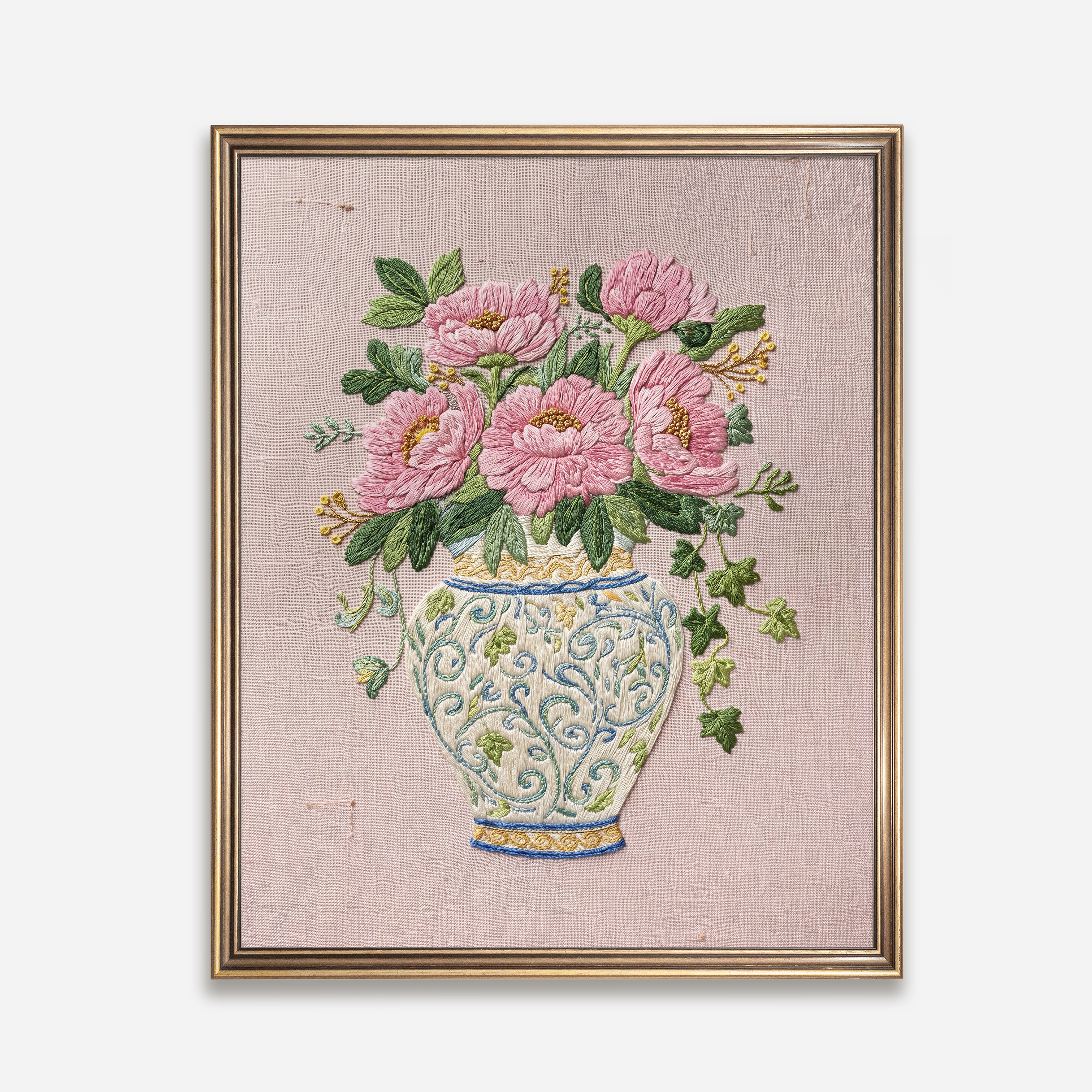
A great example of this aesthetic is the Cottagecore Peony Vase Wall Art Print — blush peonies rendered in a hand-stitched style against a soft linen background, designed to feel like something pulled from an antique chest rather than printed this morning.
Where Embroidery-Style Art Works in Your Home
One of the strengths of this aesthetic is its versatility. Because it reads as warm and handcrafted rather than bold or graphic, embroidery-style wall art layers well into almost any room without overwhelming it.
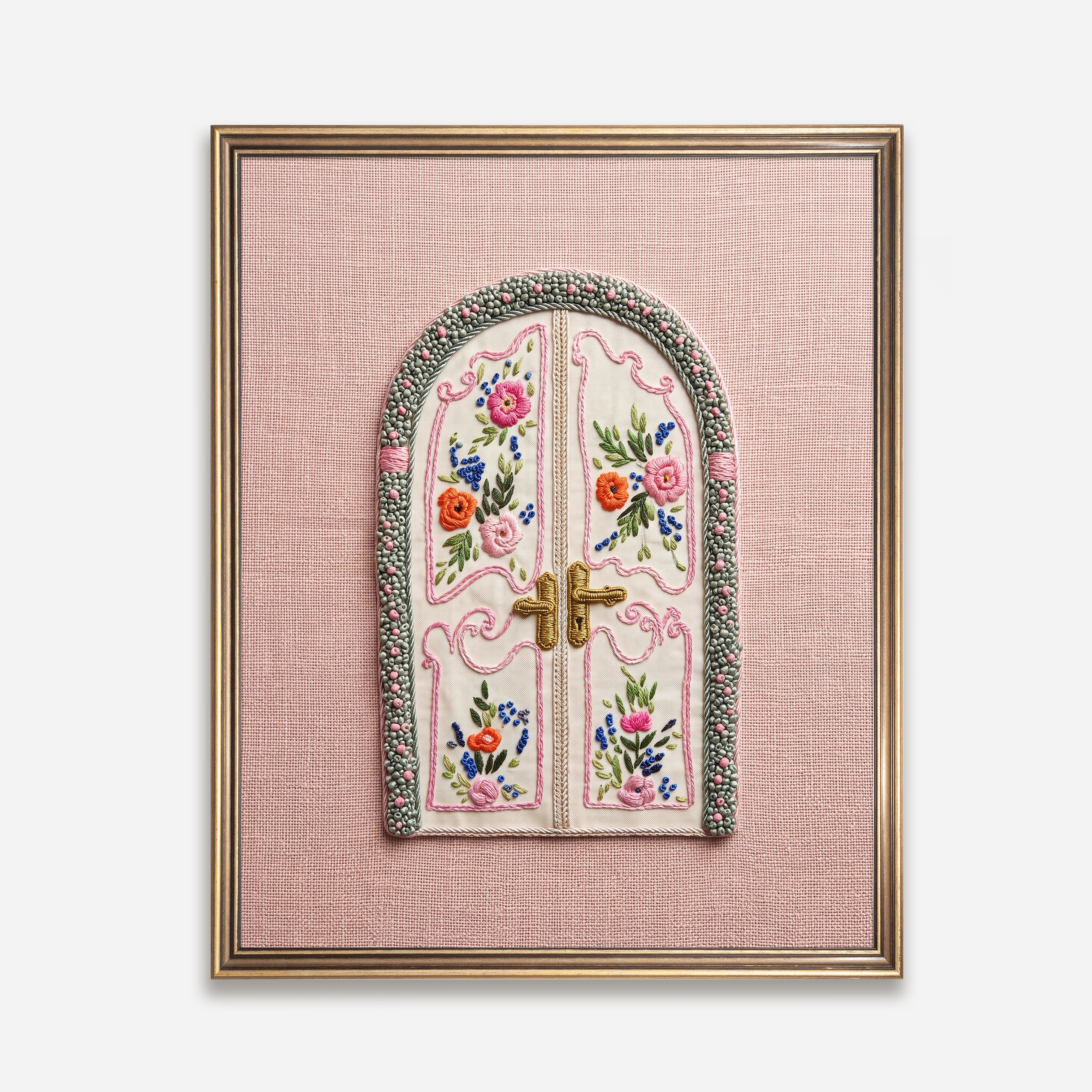
Living Room: A large embroidery-style floral print — especially something with botanical or cottage garden motifs — works as a quiet focal point. It adds visual interest without competing with furniture or other decor. Pair it with natural linen, rattan, or vintage wood for a cohesive cottagecore or grandmillennial look. The Cottagecore French Floral Door Print is a strong choice here — its blush, coral, and sage palette grounds a space beautifully.
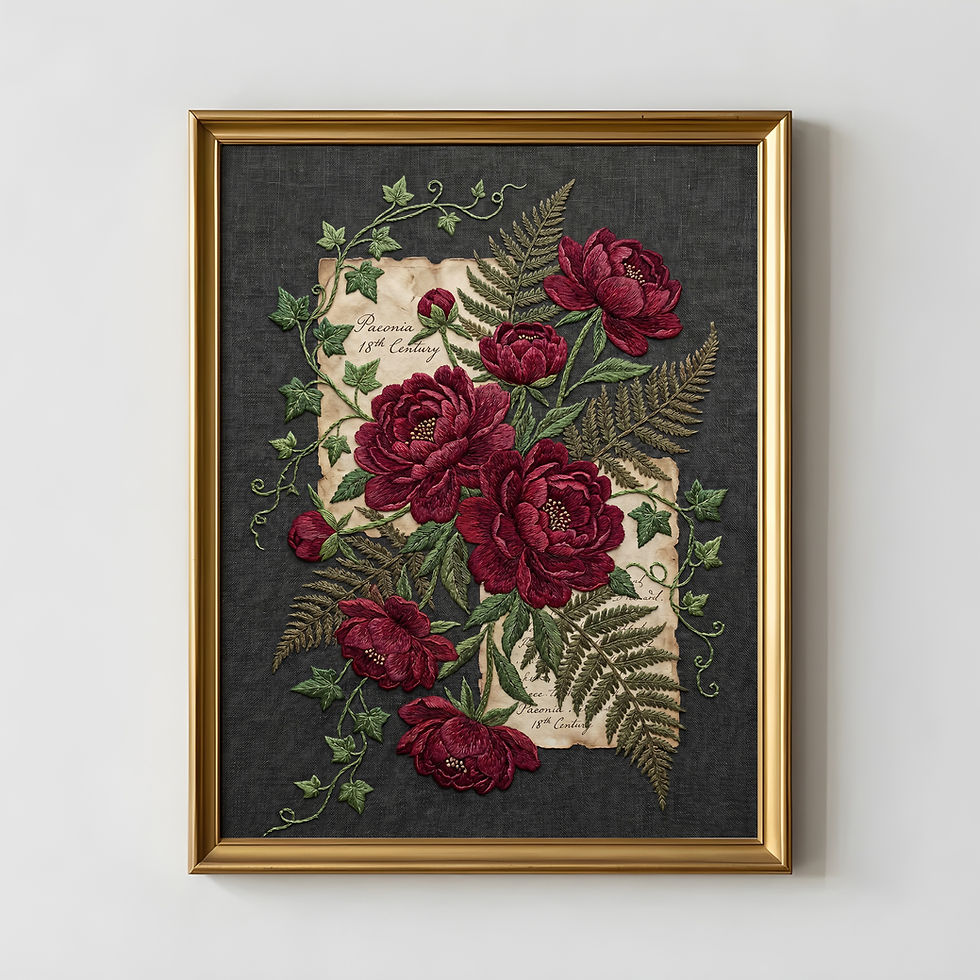
Bedroom or Reading Nook: This is where darker, moodier embroidery-style art really comes into its own. Deep burgundy, charcoal linen backgrounds, and rich botanical motifs create an atmosphere that feels contemplative and layered. The Dark Academia Peony Wall Art Print — with its deep peonies over aged manuscript pages — was designed exactly for this kind of space.
Nursery: Soft, sweet embroidery-style prints — baby animals, cottage florals, gentle scripture verses — are a natural fit for nurseries. They feel heirloom without being fussy, and the muted palette keeps the room calm. They're also the kind of art that grows with a child rather than being quickly outgrown.
Home Office or Study: For a dark academia or moody aesthetic, a cross-stitch style botanical print — something with depth and drama — adds the kind of intellectual warmth that makes a study feel like a space worth spending time in.
Embroidery-Style Art vs. Actual Embroidered Pieces: What's the Difference?
Actual hand-embroidered art — a stitched piece on fabric — is a labor of love. A single piece can take dozens of hours to complete, and the result is genuinely unique and irreplaceable. They're wonderful, and if you have one, treasure it.
Embroidery-style printable art offers something different: the visual warmth and heirloom aesthetic of that craft tradition, at a fraction of the time and cost. It's accessible — you can download, print, and frame a piece the same day you decide you want it. And because the design quality is high (Luxy Vibes prints are 300 DPI with multiple size options), the finished result, properly framed, is difficult to distinguish from something much more expensive.
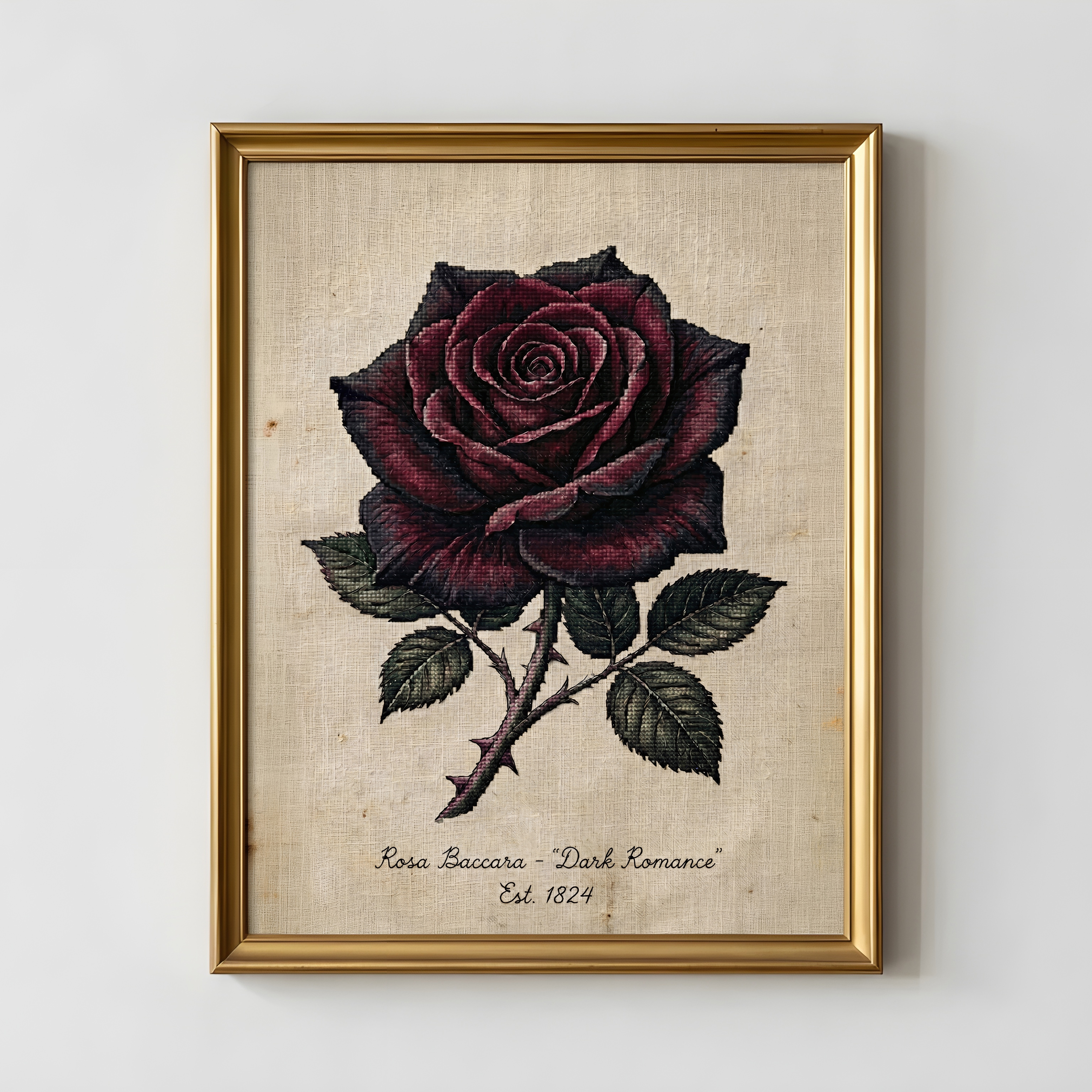
The Dark Romance Rose Print — a deep burgundy cross-stitch rose on weathered linen — is a good example of how close this aesthetic can get to the real thing when the design is done with care.
How to Frame and Style Embroidery-Style Prints
The frame you choose will significantly affect how your print reads in the room. Here are a few pairing guidelines based on the aesthetic you're going for:
Cottagecore / Grandmillennial: Ornate gold or antique brass frames, wide cream or white mats, vintage wood frames with visible grain. These amplify the heirloom quality of the print.
Dark Academia / Moody: Deep walnut or ebony frames, minimal or no mat. The drama of a dark frame against a dark or textured wall adds depth. Ornate gold also works if you want more richness.
Nursery: Simple natural wood frames (birch or maple tones) or soft white frames keep the look gentle and sweet.
Paper: Always print on matte or fine art paper rather than glossy — the texture of matte paper reads closer to fabric and enhances the embroidery illusion significantly.
For gallery walls, embroidery-style prints layer beautifully with botanical illustrations, vintage maps, dried floral arrangements in frames, or other textile-look prints. Vary the frame styles slightly for a collected, curated feel rather than a matched-set look.
Want to be first to see new embroidery-style prints as they're added to the collection? Join the Luxy Vibes list and get 15% off your first order — new designs are added regularly across all aesthetic categories.
Why Printable Embroidery Art Is Worth Your Attention
If you've been searching for wall art that feels genuinely different from the mass-produced prints at big box stores — something that has a point of view, a sense of craft, and a visual warmth that holds up over time — embroidery-style printable art is worth exploring seriously.
It fills the gap between mass-market art and genuinely handmade pieces. It's priced accessibly, available instantly, and — when printed and framed well — looks like something that took real skill and intention to create. Because it did.
Every Luxy Vibes embroidery-style print is designed with that in mind. Whether you're drawn to soft cottagecore florals, moody dark academia botanicals, faith-filled scripture art, or gentle nursery prints, the aesthetic is the same: art that feels like it was made with care, for a home that deserves the same.
Browse the full embroidery-style collection at LuxyVibes.com — and if you find something that feels like home, it probably is.


Comments